What it looks like
It often arrives with imagination: the age at which a child can picture something that is not there is also the age at which a coat on a door can become somebody. It shows up as stalling at bedtime, calling out, or arriving in your bed at two in the morning.
What tends to help
Believe the feeling before you correct the facts. "There's nothing there" answers a question they did not ask; "the dark feels big tonight" answers the one they did.
A predictable routine, the same every night, so the part before lights-out is something they can count on. A small night light is not a failure.
Get to know the dark in daylight terms: a walk at dusk, looking at the stars, finding what the shapes in the bedroom really are with the light on.
These are our practical suggestions, not medical advice. If fear of the dark is severe, getting worse, or stopping a child from sleeping for weeks, it is worth raising with your doctor or health visitor.
Where a book comes in
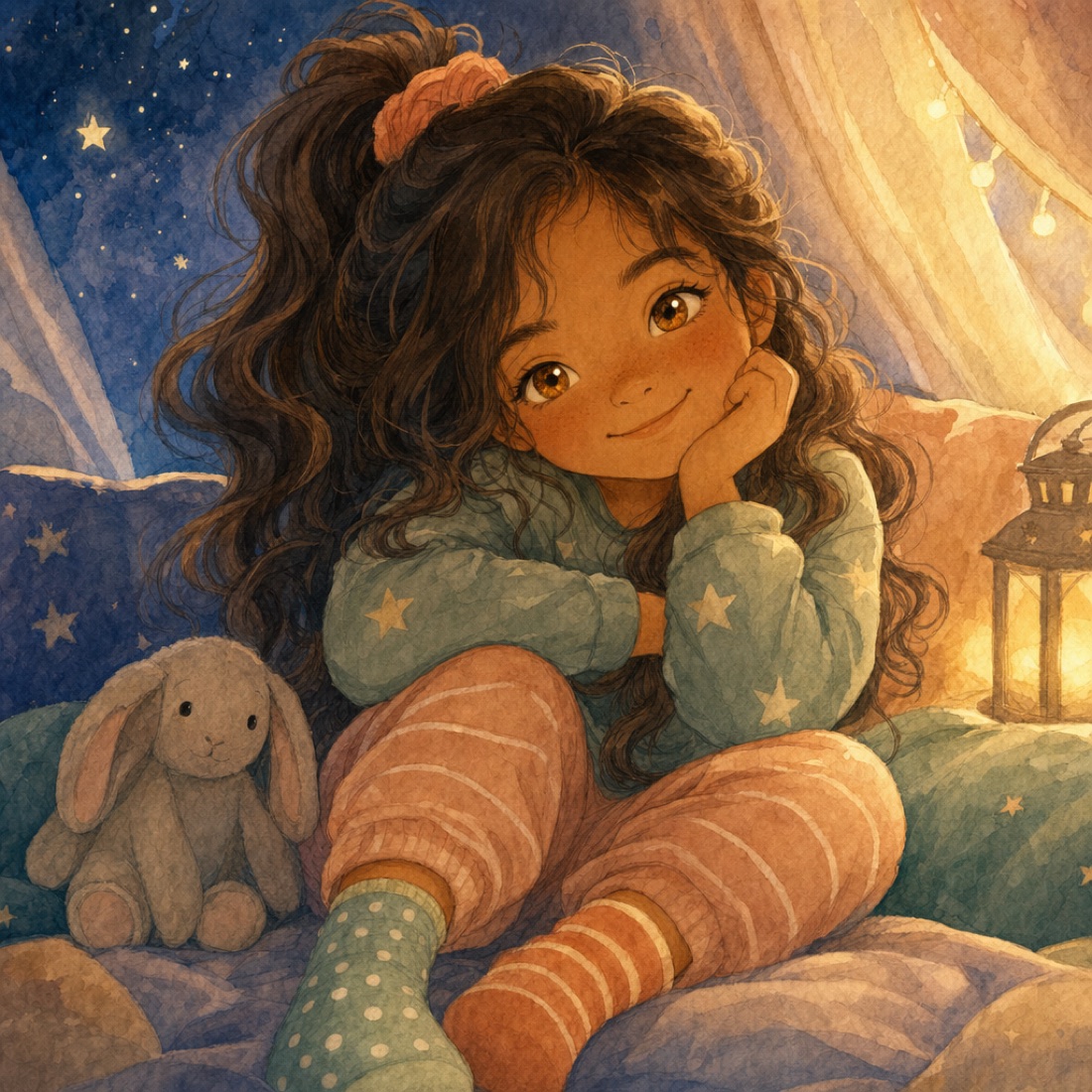
A story lets a child look at a fear from the outside. In ours, the child discovers that the sky is awake too, and that the dark is something that covers you, not something that watches you. As we wrote it, no monster appears, because a book meant to calm bedtime should not add something new to be scared of.