Penwynn · For families
Helping an older child with a new baby
Nobody warns you that the hardest part of a second baby is the first child. Here is what tends to help, and one thing we make.
What it looks like
It is rarely jealousy in the way people expect. More often it is a child who was the whole world for three or four years, and is now sharing it with somebody who cannot even talk yet — and who gets picked up every time they cry.
The behaviour that follows tends to be about attention rather than the baby: going back to baby talk, sudden clinginess, accidents from a child who was reliably dry, or a flatness that is easy to miss because it is quiet and convenient.
What tends to help
Naming the feeling for them, rather than correcting it. A four-year-old does not have the word for what they are feeling, and being told they love their brother really does not give them one.
A job only they can do. Not a chore — something with status. Choosing the babygro, being the one who knows which song works, being first to spot a real smile.
Time that is not shared and is not earned. Twenty minutes that would have happened anyway, doing something ordinary, without the baby in the room.
Being talked about, not just talked to. A great deal of a new sibling's first months is a house full of adults discussing somebody else within earshot of a child who used to be the subject.
Where a book comes in
A story is one of the few ways a small child can look at a feeling from the outside. It happens to somebody in a book, which makes it safe to think about — and if the somebody in the book is them, by name, with their hair and their house and their actual little brother, it stops being a general story about siblings and becomes a story about them.
That is the whole of what we make. You describe the family; the story and every illustration are written and drawn for those people. Nothing is a template with a name dropped into it, which is why the book below is about Ava and Diego rather than about a child and a baby.
A book we made for exactly this
Ava is four and has just met her brother Diego. Nobody in it is unkind to her, which is the part that is hard to explain — and the part the book is about.
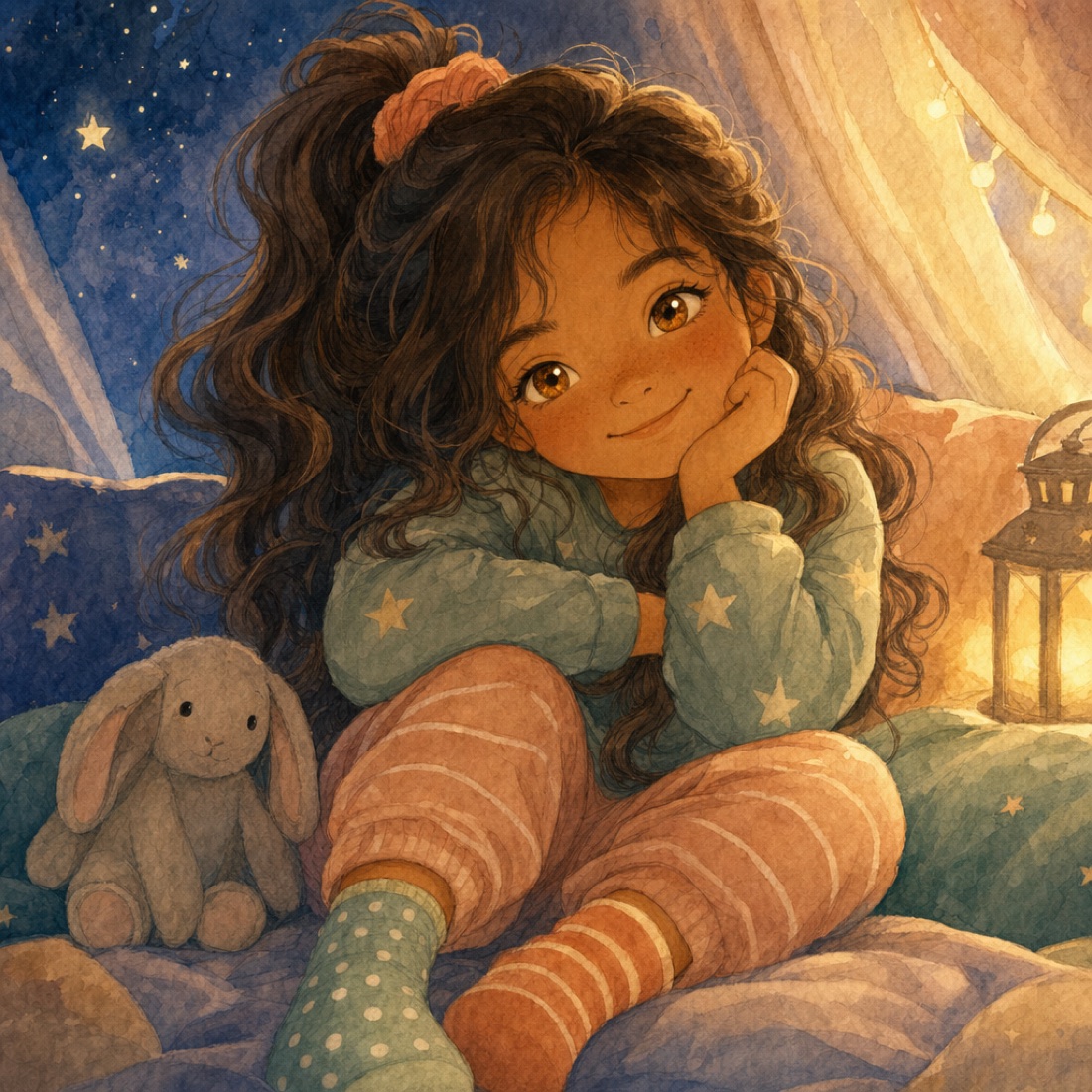
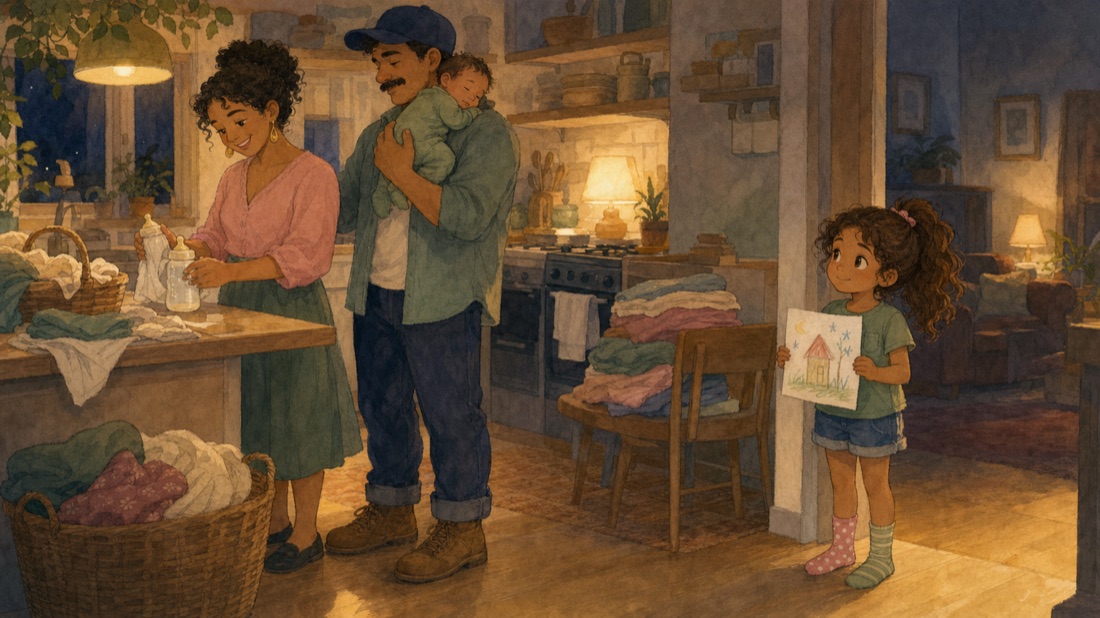
Ava had a lap to sit in and a book with a bent corner. Then the baby came, and she had to work out where she fits now that someone smaller needs it more.
Ava, her mum Carmen, her dad Luis, and baby Diego · 36 pages · 8 × 8 inches square
Read every page →Questions about this
- When should I read a new-sibling book to my child?
- Before the baby arrives if you can, and again afterwards. Beforehand it is a rehearsal for something abstract; afterwards it is a description of something they are living through, and it lands differently. Most families we hear from read it far more in the second month than the first.
- What age is this kind of book for?
- Roughly two to seven. You choose the reading age when you make the book, and the words are written to it — a book for a three-year-old is genuinely shorter and simpler than the same story for a six-year-old, rather than the same text in a bigger font.
- Can the baby be in the book if they are not born yet?
- Yes. Give the baby's name if you have chosen one, and say they are new. The story is written around the arrival rather than around a face, so it works before the birth and still reads correctly afterwards.
- Can both children be in it?
- Yes, and that is usually the point — the older child is the one the story is about, and the baby is in it as the baby. Up to five people can appear and recur through the book, so parents and grandparents can be in it too.
- Is a personalised book actually better than an ordinary one?
- For this particular problem, we think so, and the reason is narrow: an older sibling adjusting to a baby is dealing with not being the subject any more. A book in which they are unambiguously the subject does something a general story about sharing does not. For most other purposes an ordinary picture book is excellent and considerably cheaper.
Questions about the books themselves →
Make one for your family
Describe them and we'll write and draw it. It is free until you have read the whole story and seen every page — you only pay if you want it printed.
Make a bookQuestions first? hello@penwynn.com